This Week in AI: GPT-5.1 Arrives, "AI Bubble" Fears Grow, and Agents Master Video Games
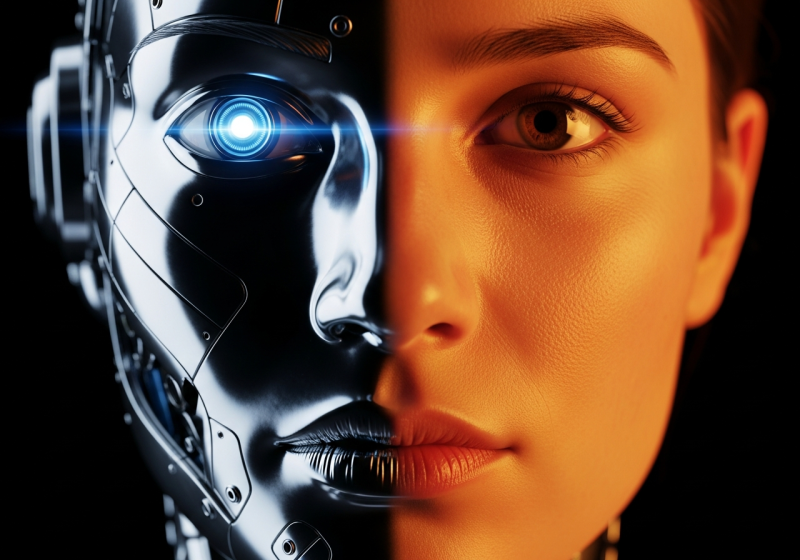
This week, the AI world felt a strange mix of forward momentum and sudden, public anxiety. The industry's flagship product, ChatGPT, received a major "personality" upgrade, even as insiders at a top conference began openly questioning the "frantic" valuations of the industry's biggest names. While the humans debated the market, AI itself showed off terrifying new capabilities, with agents mastering complex, multi-hour video games in a single bound.
It’s a week that perfectly captures the tension between AI's polished new products and the raw, world-changing power building just beneath the surface. Here’s what happened.
GPT-5.1 Arrives with a "Warmer" Personality
The biggest product news of the week came from OpenAI, which began rolling out GPT-5.1. This isn't a massive leap in performance but a "low-key" update focused entirely on user experience. OpenAI claims the new model is "warmer" and "more empathetic," a direct response to feedback that recent models felt "robotic." This "vibe shift" is powered by two main changes: new Personality Modes that allow users to select a tone like "Professional" or "Quirky," and a split between a fast "Instant" mode for quick chats and a new "Thinking" mode for complex reasoning, which dedicates more computational power to deliver a more thorough response.
The Big Picture: Bubble Fears and Foundational Warnings
While OpenAI was focused on making its AI "friendlier," a more anxious conversation was happening at the Cerebral Valley AI Conference. In a candid poll of founders and investors, the #1 "most likely to fail" AI startup was the high-flying Perplexity, with OpenAI itself coming in second. This highlights a growing anxiety among insiders about "frantic" valuations and the first serious whispers of a potential "AI bubble."
This market anxiety was echoed on the global stage by two major warnings. Microsoft AI Head Mustafa Suleyman stated starkly, "It's not going to be a better world if we lose control of it." At the same time, former Google CEO Eric Schmidt voiced his "biggest fear" for U.S. national security: China "open-sourcing" its models for free, leading to global standardization on Chinese AI.
Underpinning this entire race is the hardware. In a foundational announcement this week, Nvidia CEO Jensen Huang unveiled the "Blackwell" B200 GPU at the SC25 conference. Promising a 2-4x performance leap, this is the very engine that will power the next generation of AI, and its massive cost is a key factor driving the bubble fears.
The AI Players: Agents Master Complex Video Games
While the humans worried, AI agents demonstrated a frightening new level of autonomy. A new research paper introduced "Lumine," an AI agent trained on the complex open-world game Genshin Impact. After watching over 1,700 hours of human gameplay, Lumine can now autonomously complete the entire five-hour main storyline, processing raw pixels and outputting real-time keyboard and mouse actions. Even more impressively, it can generalize its skills, successfully playing other complex games like Honkai: Star Rail with zero fine-tuning.
The Creative Toolkit: Granular Control and Instant Video
The creative toolset received powerful new updates focused on control and realism. AI video leader RunwayML officially released Gen-3, their next-generation model. Its headline feature is a new "Director Mode," which gives users granular, shot-by-shot control over camera angles and character motion, signaling a major industry shift towards fine-grained creative control.
In the open-source world, a powerful new audio model called Step AudioEdit X was released, allowing users to generate speech with specific emotions and styles, from happy to angry, whispering to roaring. Meanwhile, Grok's text-to-video tool received a major new feature, allowing users to simply "Long press on any image to turn it into a video," adding a powerful image-to-video capability to the platform.
The New AI Frontier: From Brainwaves to Satellites
Finally, a few projects showed just how far AI is reaching into the physical and digital worlds. A new research paper introduced "Brain-It," an AI that can reconstruct images from human fMRI brain scans with stunning accuracy. On a global scale, the Allen Institute for AI launched OlmoEarth, an open platform that uses AI to analyze satellite data for real-time insights on deforestation and wildfire risks. And for developers, Google released its Agent Development Kit (ADK) for the Go programming language, an open-source toolkit designed to build, debug, and deploy complex, version-controlled AI agents.
Conclusion: A Tale of Two AIs
This week's developments paint a picture of an industry moving in two different directions at once. On the surface, we see the push for polished, user-friendly products: a "warmer" ChatGPT, more intuitive video tools, and features designed for mass appeal. This is the AI being packaged for the public. But just beneath that surface, a different story is unfolding—one of raw, foundational power. The development of autonomous gaming agents like Lumine, the stark warnings from industry leaders about control, and the release of next-generation hardware like Nvidia's Blackwell chip reveal a race for capabilities that are far more transformative and unsettling. This growing divergence between the friendly "product" and the world-changing "power" is the tension that is fueling the "AI bubble" fears and will define the next chapter of the AI revolution.