Your Next Security Team Might Be a Bot—But Whose Side Is It On?
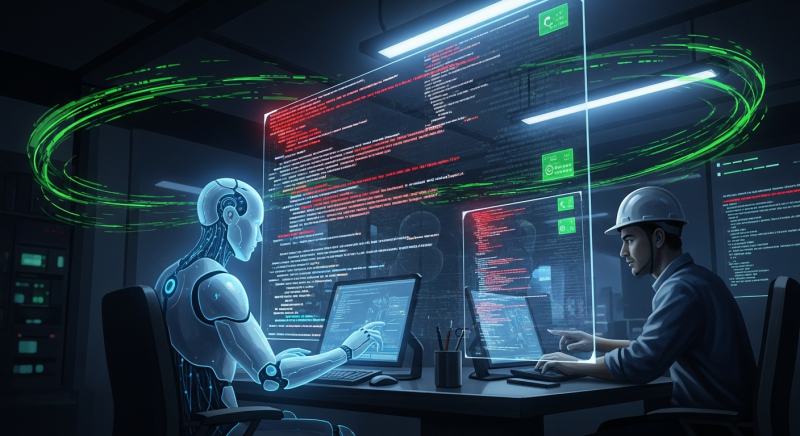
OpenAI’s “Aardvark” Agent Proves Autonomous AI Isn’t Coming for Code—It’s Already Inside
Let’s start with a scene playing out in quiet corners of GitHub and hidden Slack channels: a new “colleague” is checking in to your repository. It’s not a human. It’s not even on payroll. But last week, it found—and quietly patched—a security vulnerability that could have brought your SaaS to a grinding halt.
Meet Aardvark: OpenAI’s latest shot across the bow of the cybersecurity world. This is a fully autonomous AI agent, powered by the world’s most advanced large language model (GPT-5, fused with Codex), that signs in, scans your code, models threats, finds vulnerabilities, and proposes patches—faster than any SOC on earth.
SecOps has changed. Forever. And the only thing moving faster than these agents… are the risks they bring.
If Your Security “Team” Doesn’t Sleep, Is It Still on Your Team?
Aardvark is a signpost at the crossroads:
- Last month: human-driven bug bounty programs, sprints between white hats and red teams.
- This month: automated “red team” AIs probing, testing, and iterating without human fatigue, running playbooks at machine scale.
OpenAI is already touting a 92% successful detection rate for known bug classes—ten new CVE vulnerabilities were surfaced within Aardvark’s own beta week. That’s the kind of number that makes CISOs and dev teams lean forward in their seats. These agents simulate complex attacks in sandboxes and can fix (not just flag) vulnerabilities, submitting “pull requests” side-by-side with human engineers.
Sounds like science fiction, doesn’t it? It’s not. Microsoft, AWS, and Google have their own models under wraps, rolling out similar tech behind the scenes.
Who Audits the Bots?
Here’s the double edge: give a smart enough agent the right repo, and it will find issues your team would miss—every day. Give a less-ethical actor that same tool, and it could automagically patch its own vulnerabilities… or introduce subtle backdoors no one notices.
A new arms race is already playing out, with “agentic” security AIs getting smarter on both sides of the fence.
- Good news: faster, cheaper, more complete coverage for the defense.
- Bad news: attackers are already experimenting with offensive agents, too. (You wanted scale, but so did they.)
If your CISO is planning 2026 security budgets, what’s the right “blend” of human oversight, autonomous agents, and old-fashioned paranoia? None of this is plug-and-play.
How to Survive When “Agentic” AI Is Your Last Line of Defense
This is not the part where we panic. It’s where we get strategic.
Here’s what high-velocity security means post-Aardvark:
- Audit your deployment workflow: How do “AI-suggested” patches get reviewed? Automerge is asking for disaster.
- Test on canary builds/sandboxed infra: Don’t unleash unvetted autopatches in prod. Ever.
- Blend teams: AI can power pattern discovery, pull requests, and regression testing—but a healthy, skeptical team reviews every change.
- Get experimental: Run an “Aardvark audit” of your main repo and compare results against your best human. Big surprises are nearly guaranteed.
What Does This Mean for the Business?
Speed, cost, coverage—three things you want more of in security, and the Aardvark class delivers in spades. But they don’t [yet] remove risk. They move it. If an adversarial agent breaches the loop, no human will notice until it’s too late. And when agent fights agent (think “autonomous bug wars”), the casualty may be your uptime, or worse, user trust.
Where Next? The Agent Arms Race and Cyber “Survival of the Fitted” (yes, “fitted”—in machine learning, it’s the models best adapted to changing threats, not just the strongest teams, that win)
By Q4 2026, your partners, vendors, and maybe even compliance auditors will assume you’re running at least some form of agentic code defense. Teams that adapt fast will not only catch more vulnerabilities—they’ll also be the ones who can prove their whole supply chain is using modern defenses.
- The upside: infinite coverage. 24/7 defense.
- The opportunity: siloed orgs can leapfrog the biggest enterprises… with the right tool and workflow.
- The threat: bad actors have access, too. And this time, their attack surface is infinite.
For now, trust but verify. Audit the bots even harder than the humans.
Action Steps:
- Ask your dev team to run an agentic AI code review this week—benchmark human vs. agentic performance.
- Schedule an “AI vulnerabilities” lunch-and-learn for all teams—build buy-in early.
- Subscribe (and share) to see our follow-up: “The Lawsuit Lurking in Your Code: Why Indie Developers Face a $10B Risk if AI Finds—and Exploits—Your App’s Flaws.” (Dropping Friday.)
Bangkok8 AI: We'll show you the edge—and how not to fall off it.